Tanya Cardoza

Degree Planner

Redesigning SCAD’s degree-Planning experience to make academ c progress, course requirements, and future planning easier for students to understand.

Overview

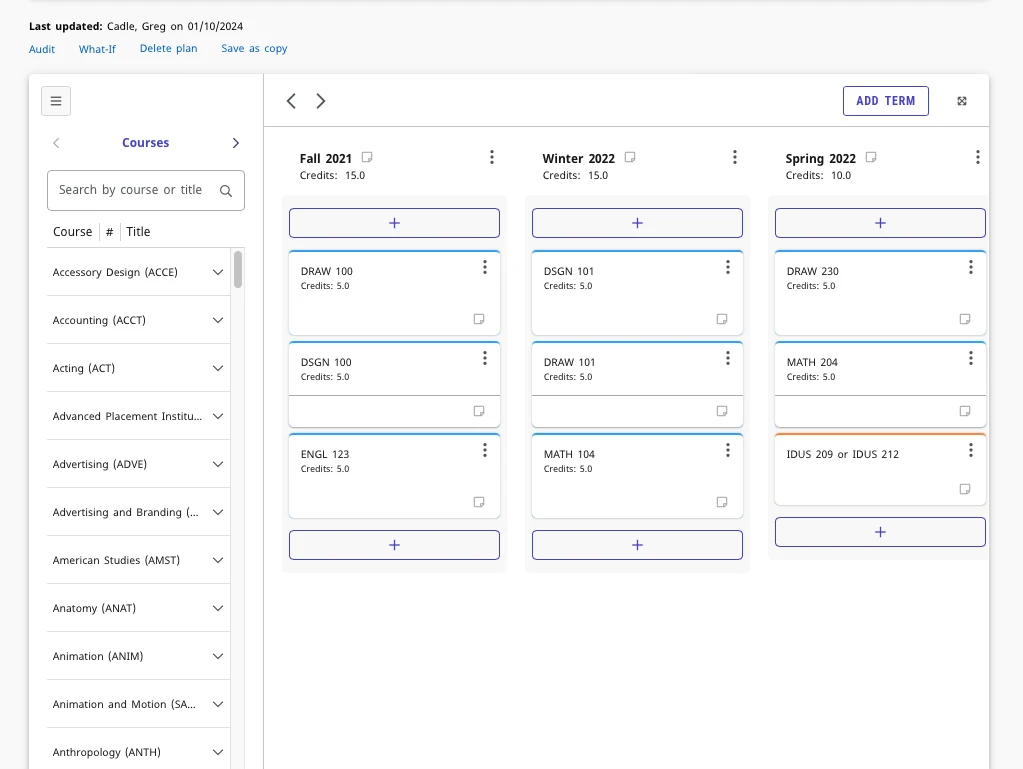
The existing SCAD Degree Planner created friction for students trying to understand and plan their academic progress. Students encountered outdated or unclear course information, limited planning flexibility, and difficulty understanding how requirements affected their path to graduation.

Approach

Client:

SCAD - Academic Team Project

My Role:

UX Researcher & Product Designer

Year:

2025

Service Provided:

UX Research · Product Design · Interaction Design · Prototyping · Usability Testing

Challenge

The existing Degree Planner presented dense academic information without making students’ progress or next steps immediately clear. Our challenge was to reduce that cognitive load while giving students a more flexible way to understand requirements and explore future coursework.

Research

Competitive Analysis
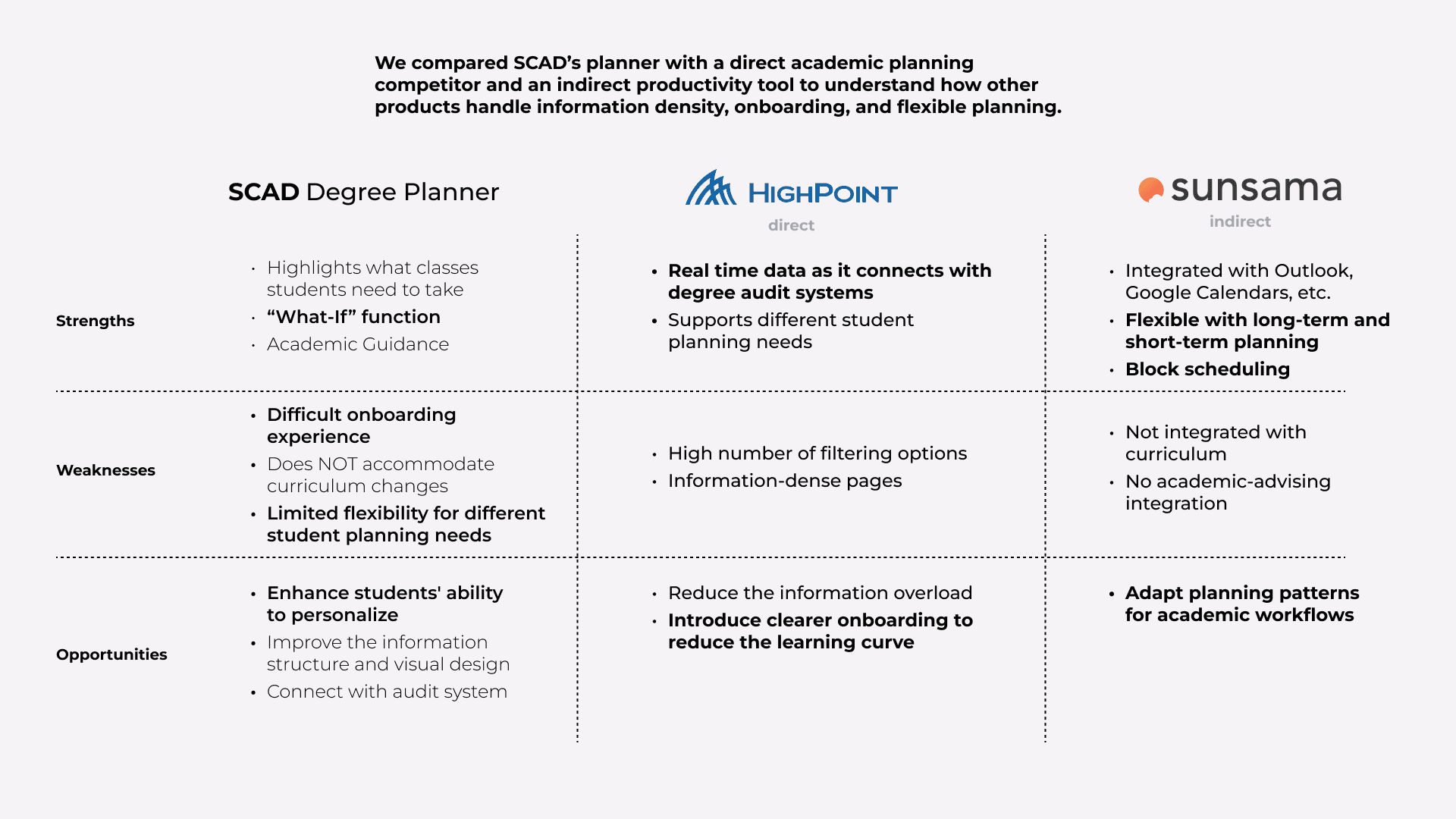

Three opportunities emerged from the competitive analysis: reduce information overload, make academic progress easier to understand at a glance, and give students greater flexibility when exploring future schedules. These became the principles we carried into the redesign.

Survey Insights


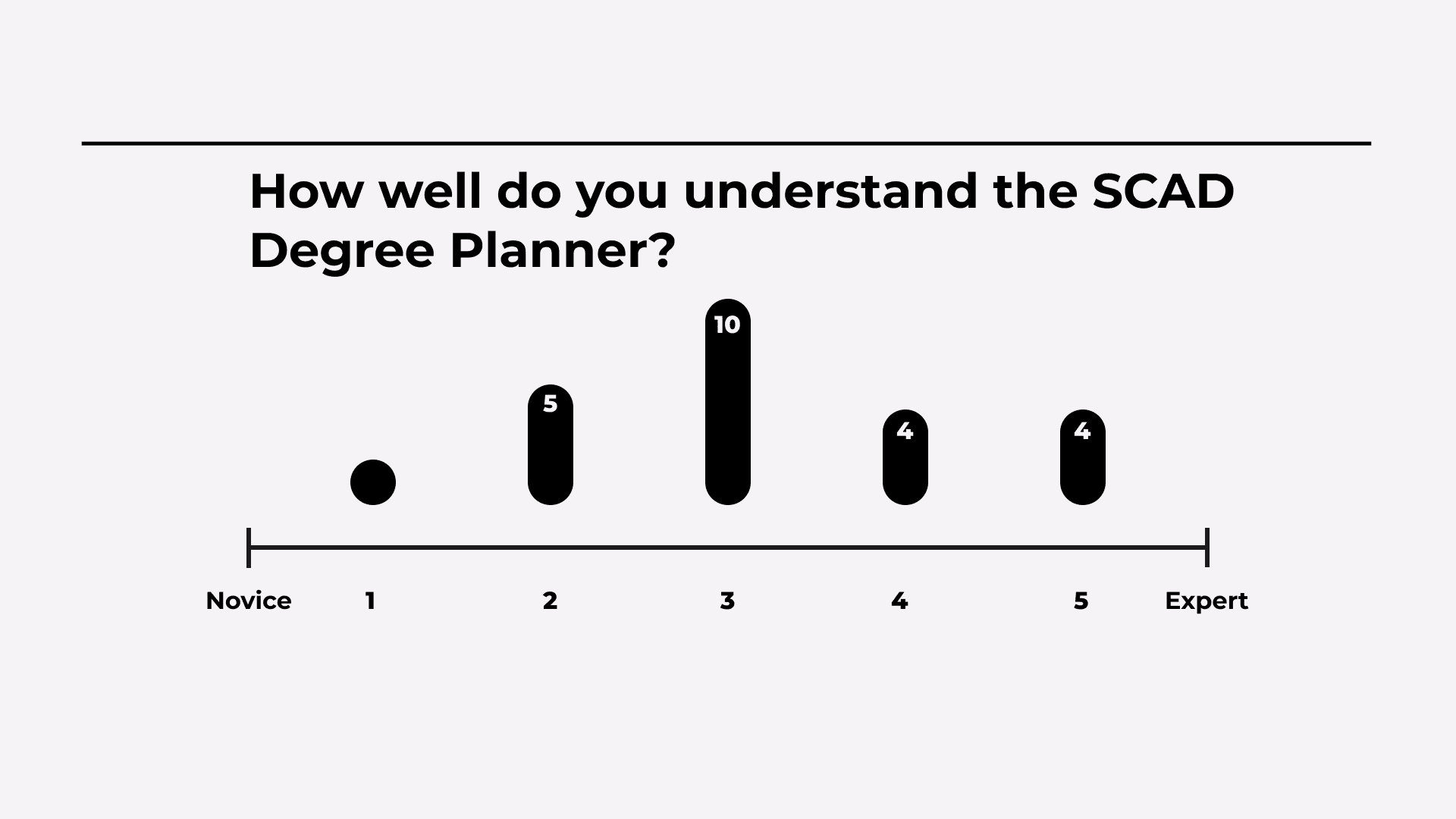
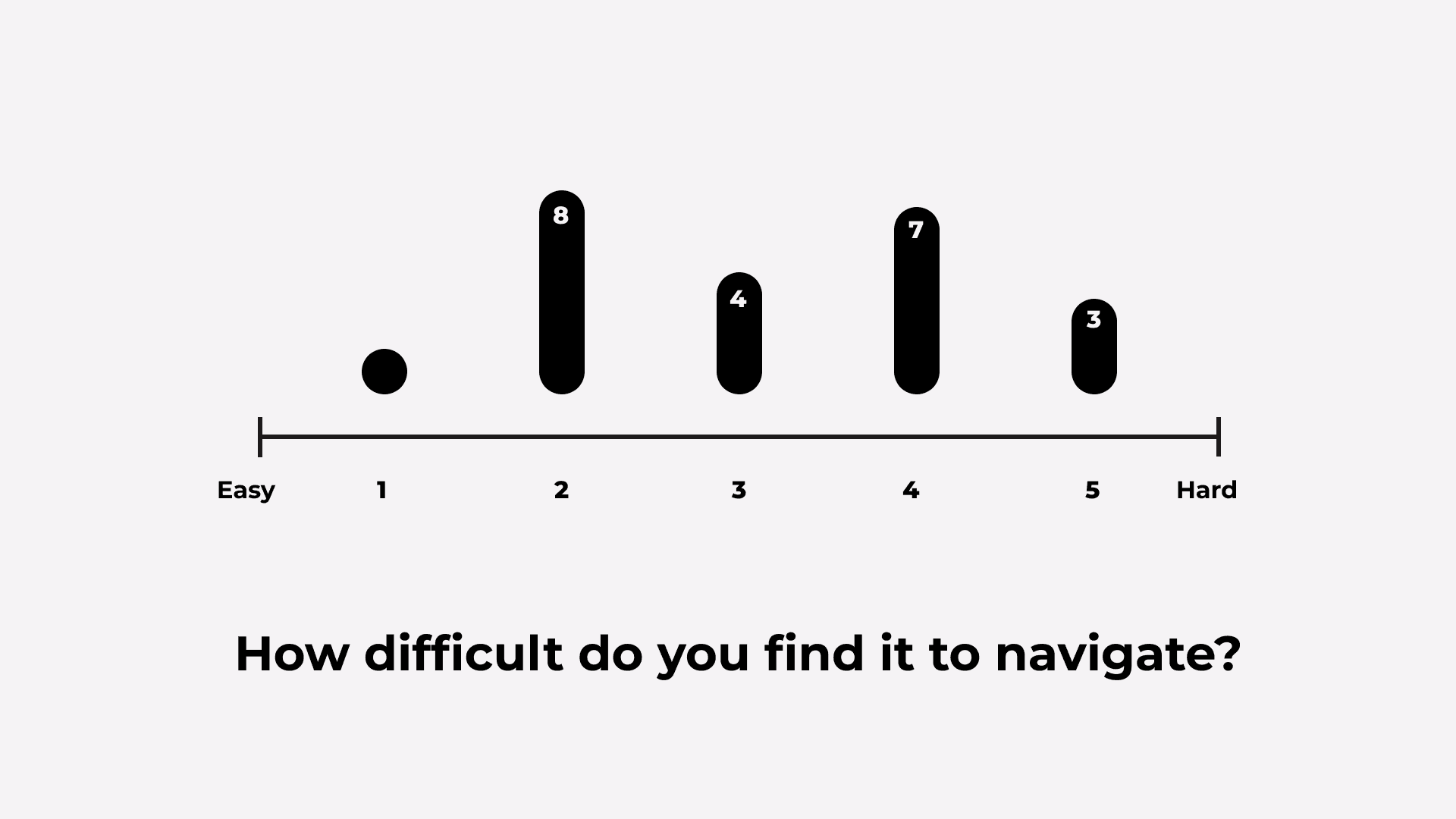
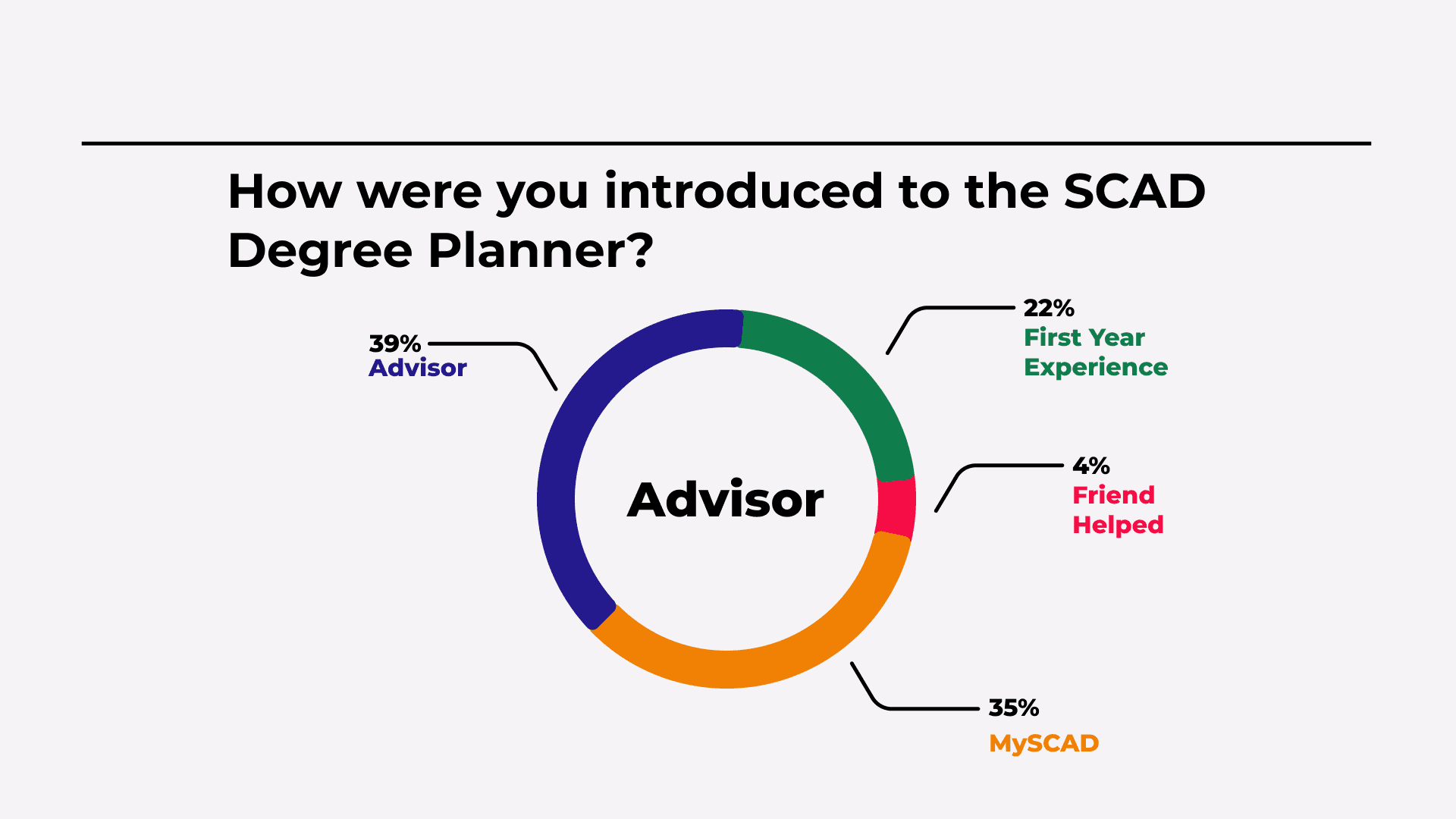
 23 SCAD students completed our survey. Rather than treating the survey as validation of a redesign, we used it to identify where students struggled with understanding, discovering, and navigating the Degree Planner.

Personas With Storyboards


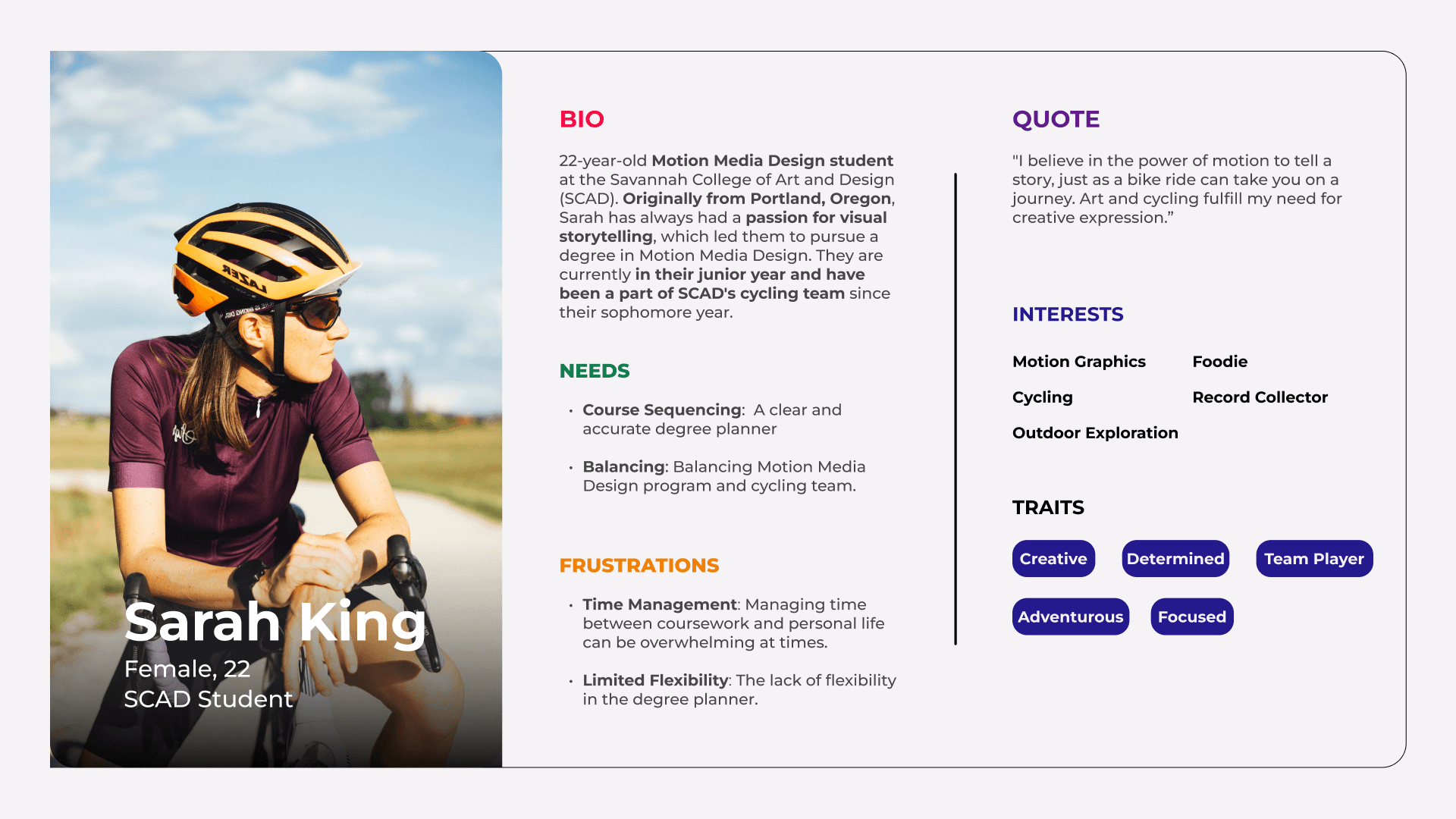
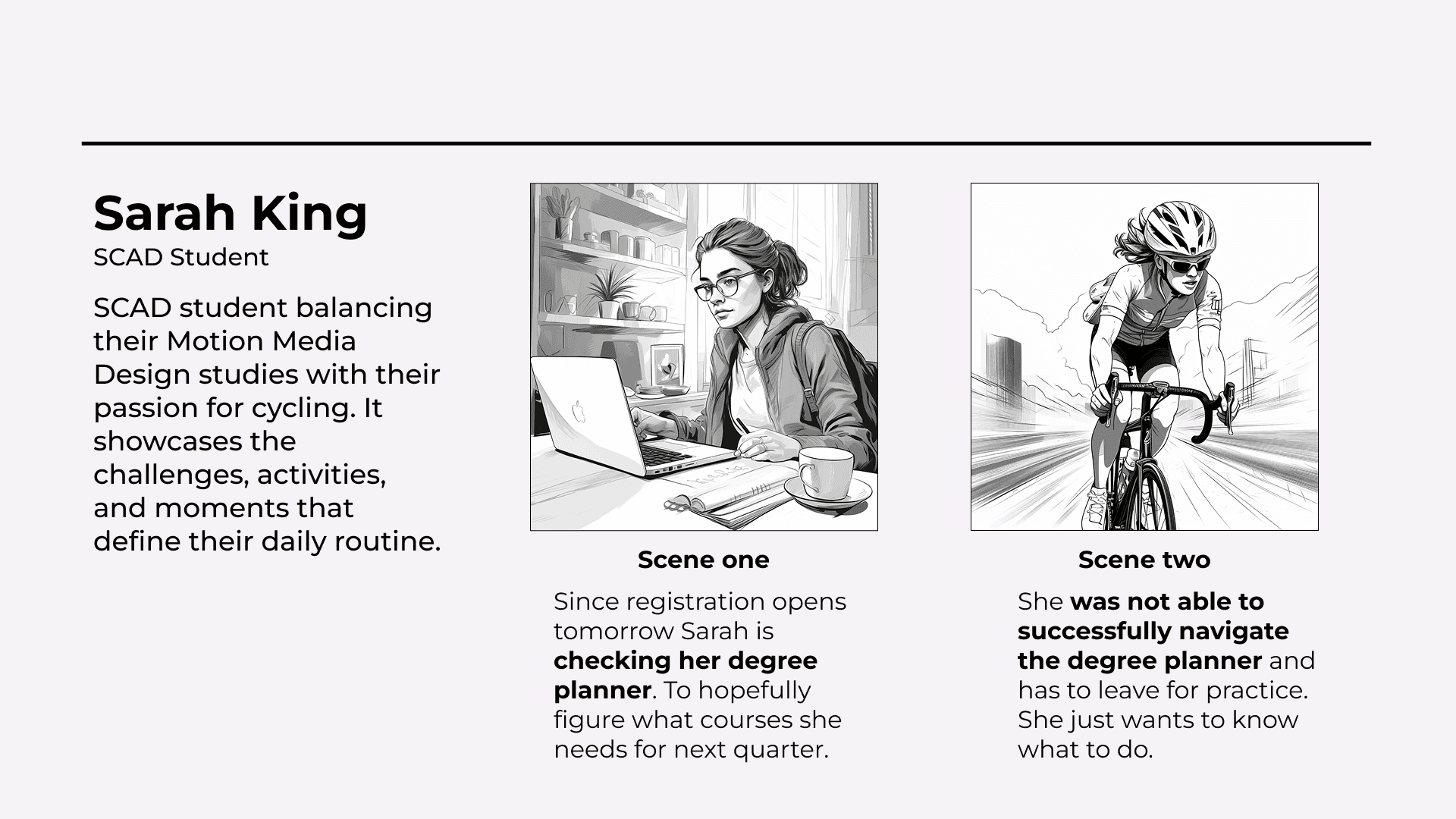
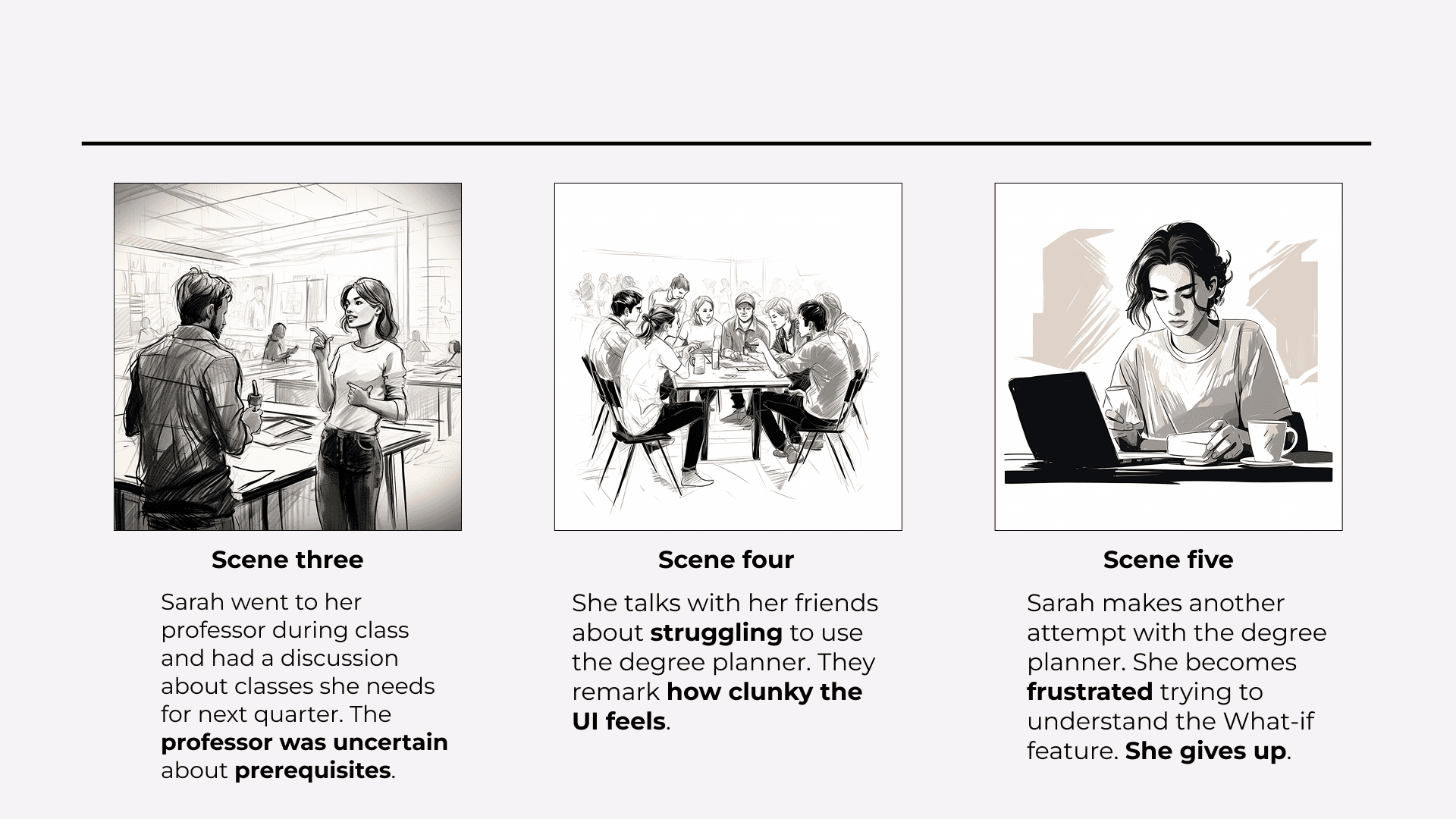
Sarah King represents our understanding of dedicated students seeking to enhance their academic journey through a more efficient degree planner.

Personas

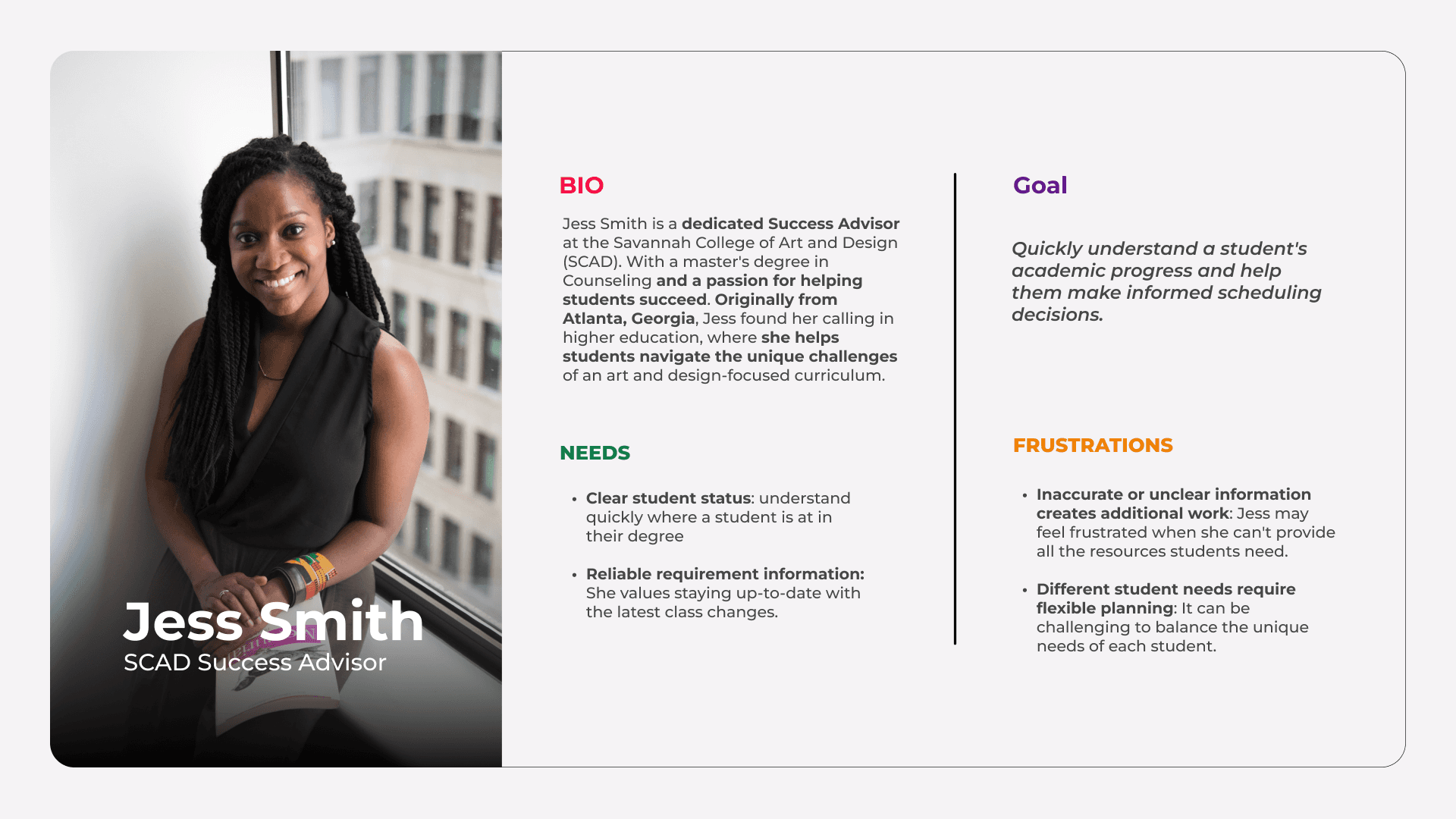
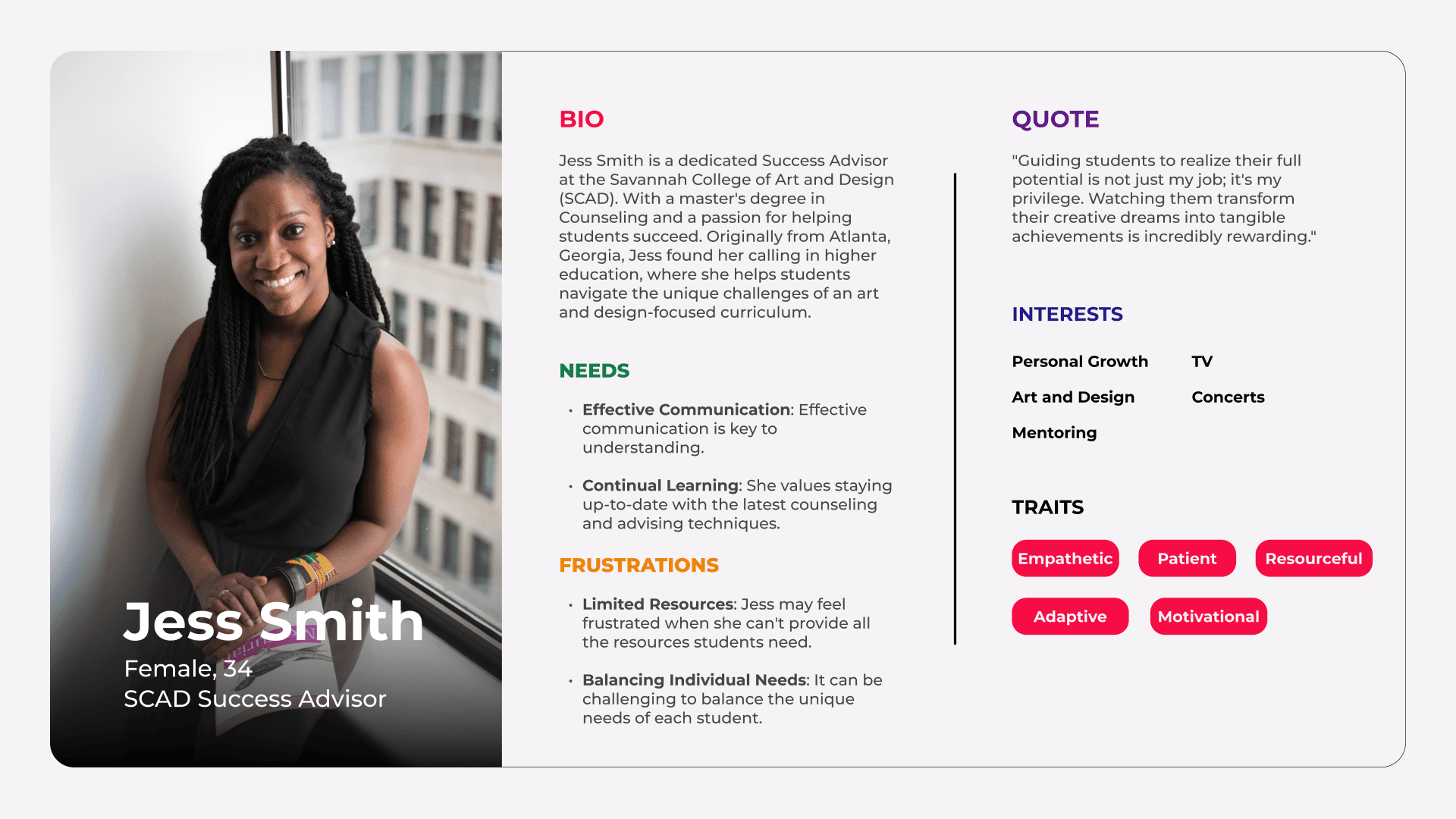
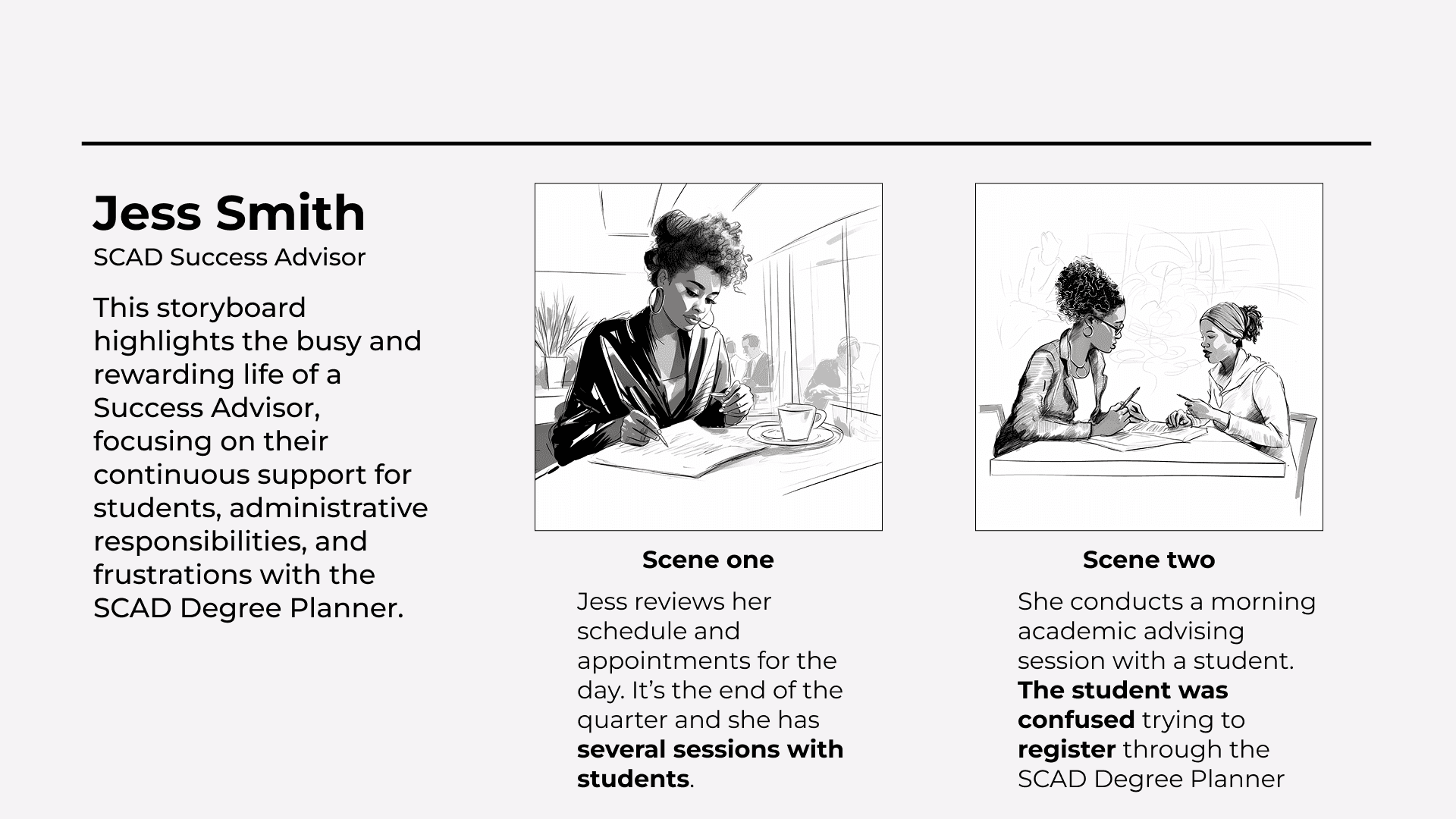
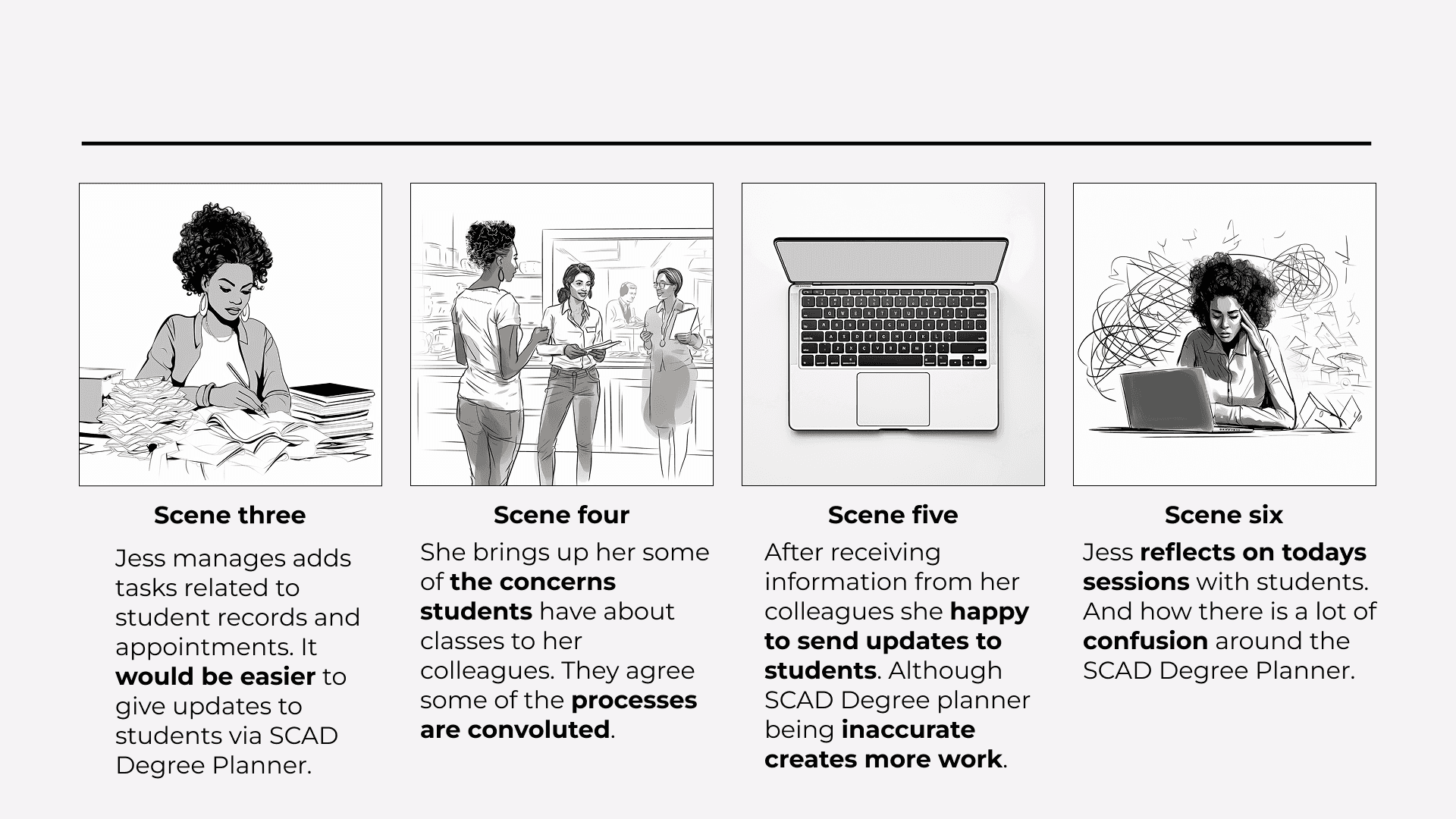
Jess is a Success Advisor at SCAD, dedicated to understanding and addressing the needs of students.

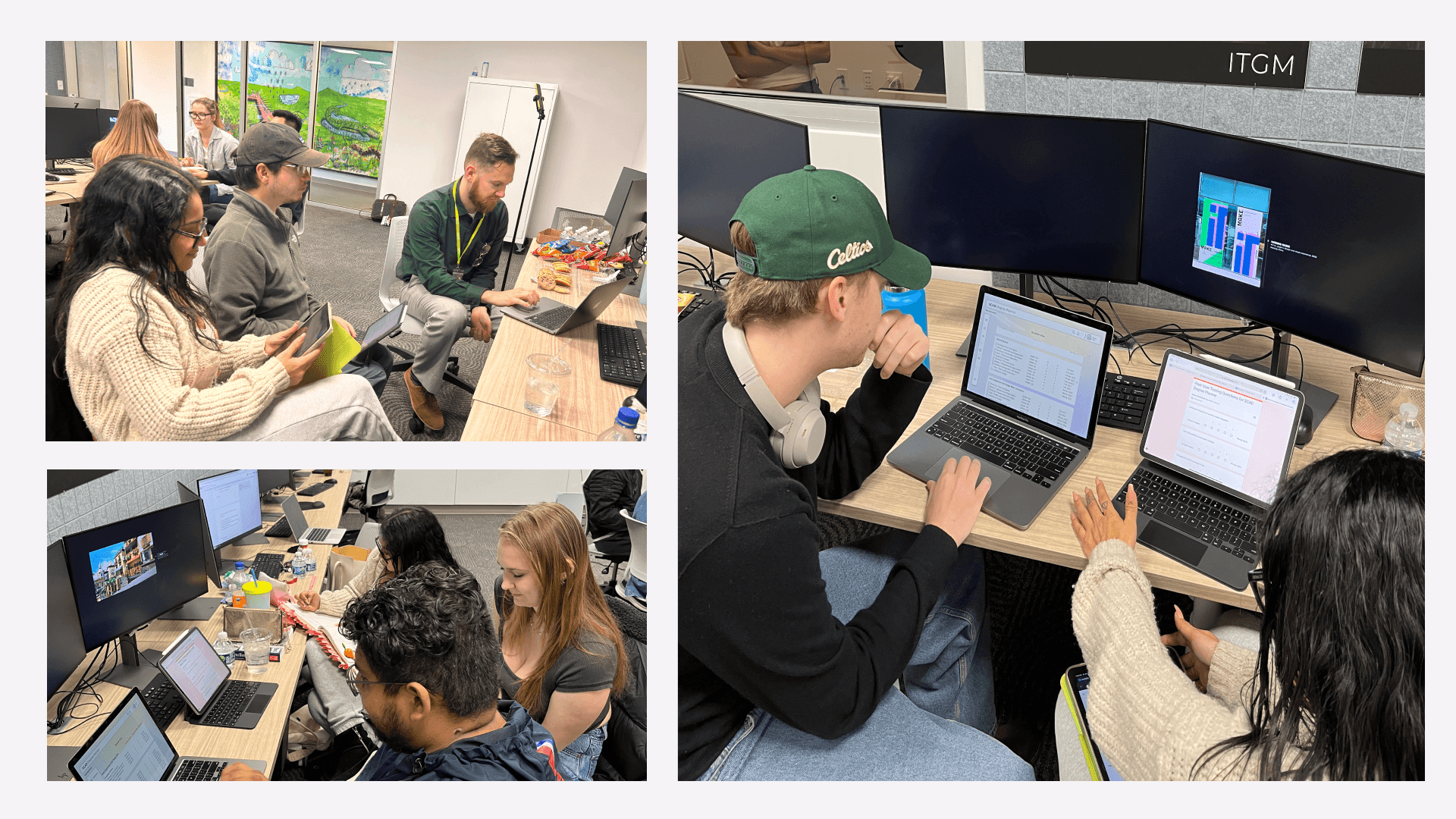
User Testing

What we tested
Participants completed 3–5 planning tasks.

What we observed
participants overlooked completion indicators / struggled to interpret status / found secondary information distracting.

What we changed
Moved secondary information behind progress bars, strengthened class completion indicators, and added a status key.


Final Design

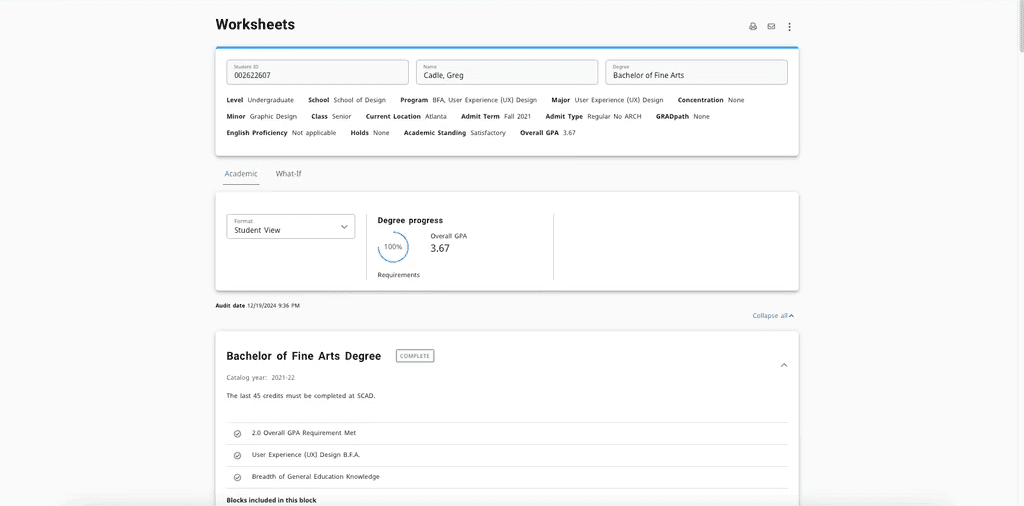
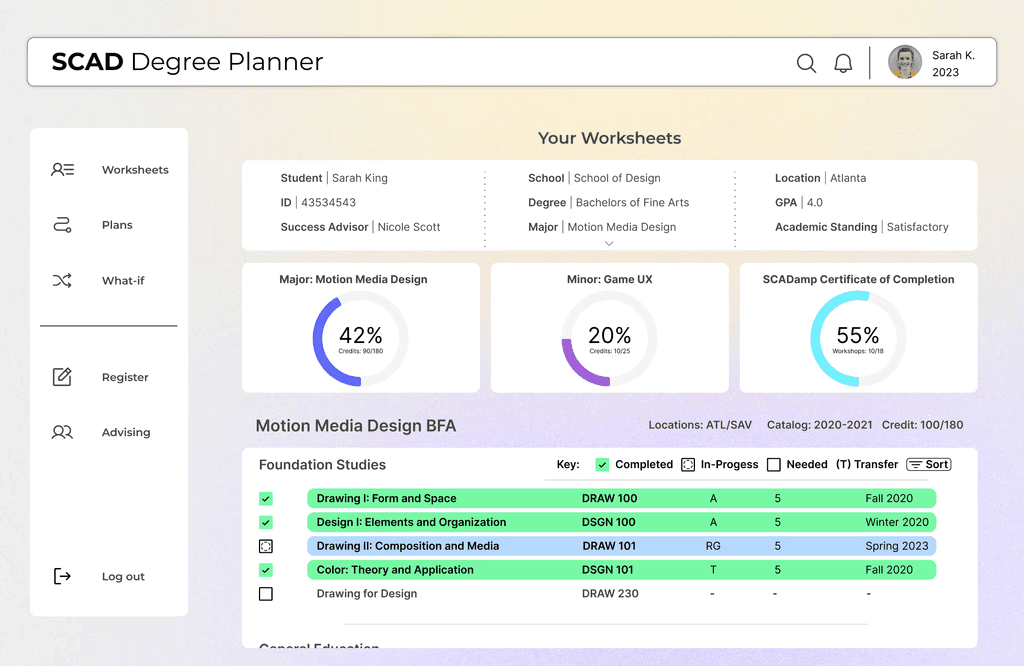
Worksheets page


Our worksheets page features an elevated and highly communicative design.

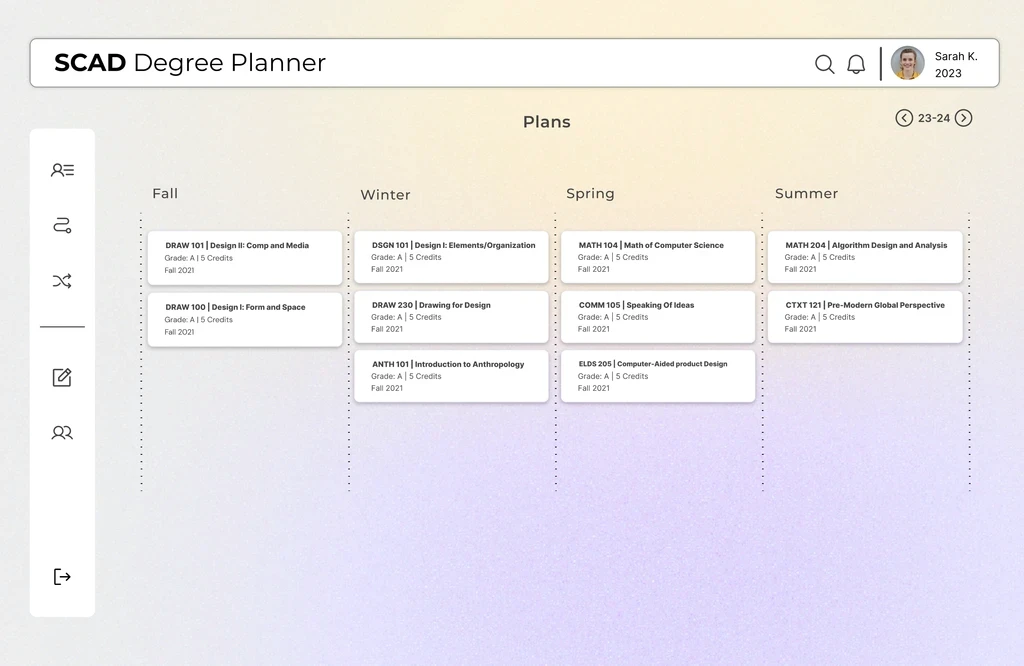
Plans page


Upon selecting  a class students now have convenient access to relevant course information.

What-if (AI integration) page


With the integration of AI, students can now confidently acquire a greater depth of knowledge and flexibly tailor their degree plan to their needs.

Conclusion

I led UX research and interaction design for the project, translating findings from student research into a redesigned academic planning experience. Our largest design changes focused on information hierarchy, degree-status visibility, and making course planning easier to understand.

Approximately three months later, SCAD's degree-planning provider released an updated interface that independently incorporated several patterns similar to concepts our team had explored. Although the teams were not connected, the overlap reinforced that our research had identified meaningful usability issues in the original experience.